

One of the most important parts of designing a successful native garden is understanding that not every part of a property is the same.
Sun exposure, moisture, soil, existing vegetation, and even the surrounding ecosystem all influence which plants will thrive. Instead of trying to force the same planting style throughout an entire property, this design takes a different approach: the front garden is designed for shade, while the backyard embraces the sun.
The result is a landscape that responds to the conditions already present rather than fighting against them.
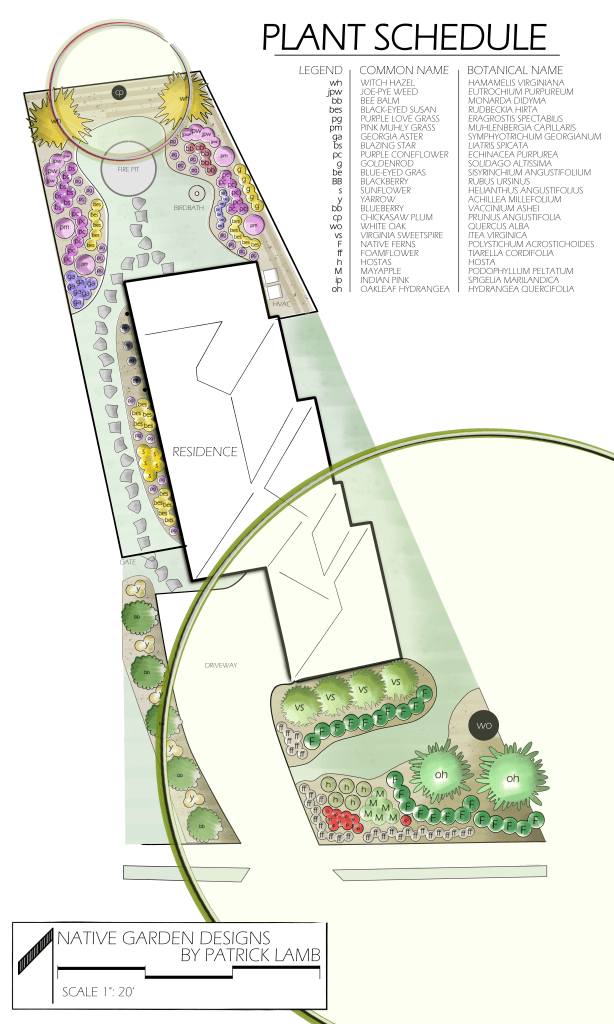
A Shade Garden in the Front
The front portion of this property receives considerably more shade, creating an opportunity to build a woodland-inspired planting.
Instead of filling the area with plants that require full sun, the design incorporates shade-tolerant species such as Native Ferns, Foamflower, Mayapple, Indian Pink, and other woodland plants.
These plants create a softer, layered landscape beneath the existing canopy while providing seasonal interest through foliage, texture, and flowers.
Shade gardens can sometimes be overlooked when people think about native plant landscaping. There is a tendency to associate native gardens with large sunny meadows filled with wildflowers.
But Georgia’s forests are incredibly diverse, and there are many native plants adapted specifically to life beneath trees.
This portion of the garden embraces that environment.
Rather than removing the character of the existing landscape, the planting works with it.
A Sun-Loving Backyard
The backyard presents a completely different set of conditions.
With more exposure to sunlight, this area provides the opportunity to introduce a larger number of sun-loving flowering plants and grasses.
The planting palette includes Joe-Pye Weed, Goldenrod, Bee Balm, Black-eyed Susan, Purple Coneflower, Blazing Star, Swamp Sunflower, Little Bluestem, Purple Lovegrass, and other plants that are well suited to sunny Georgia conditions.
These plants don’t just provide color. They help turn the backyard into a functioning habitat.
Joe-Pye Weed and Goldenrod are especially valuable additions. Both are important plants for supporting wildlife, with Goldenrod being particularly significant as a keystone plant for native insects.
Rather than choosing plants simply because they look good together, this planting considers what those plants contribute to the larger ecosystem.
Designing With Keystone Plants
One of my favorite aspects of native garden design is that a beautiful plant can also have an outsized ecological impact.
Keystone plants are particularly important because they support a disproportionately large number of insects and other forms of wildlife compared with many other plants.
Goldenrod is an excellent example.
Often dismissed as a roadside weed, Goldenrod is actually one of the most valuable groups of plants you can introduce into a wildlife-friendly garden. Its late-season flowers provide an important source of nectar for pollinators, while the plant itself supports numerous native insects.
Joe-Pye Weed also brings significant ecological value to the garden. Its tall structure and late-season flowers make it an excellent resource for pollinators while adding height and movement to the planting.
These plants were selected not only for their appearance, but because they belong in the ecosystem.
Beauty That Comes From the Right Plant in the Right Place
The front and back gardens are intentionally different.
The front is quieter and more woodland-like, with shade-tolerant plants creating layers beneath the trees.
The backyard is more open and dynamic, with taller flowering perennials and grasses creating a sunny pollinator garden.
That difference is what makes the overall landscape work.
Instead of trying to make the entire property look identical, the design allows each area to develop its own character based on the conditions already there.
This is one of the principles I value most in ecological landscape design:
Don’t fight the site. Design for it.
If an area is shaded, plant for shade.
If an area receives full sun, embrace sun-loving species.
If the surrounding ecosystem supports certain native plants, give those plants a place in the garden.
The best landscapes aren’t necessarily the ones where every square foot looks the same. They’re the ones where the plants feel like they belong.
A Garden That Belongs Here
Ultimately, this design is about creating a landscape that feels connected to its surroundings.
The shade garden reflects Georgia’s woodland environment, while the sunny backyard creates a more open habitat filled with flowering perennials, grasses, and plants that support native insects and wildlife.
Together, the two spaces demonstrate what I love about native garden design: the landscape can be beautiful because it belongs where it is.
Rather than importing a particular aesthetic and forcing it onto a property, we can look at the conditions that already exist and build from there.
The result is a garden that isn’t simply ornamental.
It’s part of the ecosystem.
Leave a Reply