
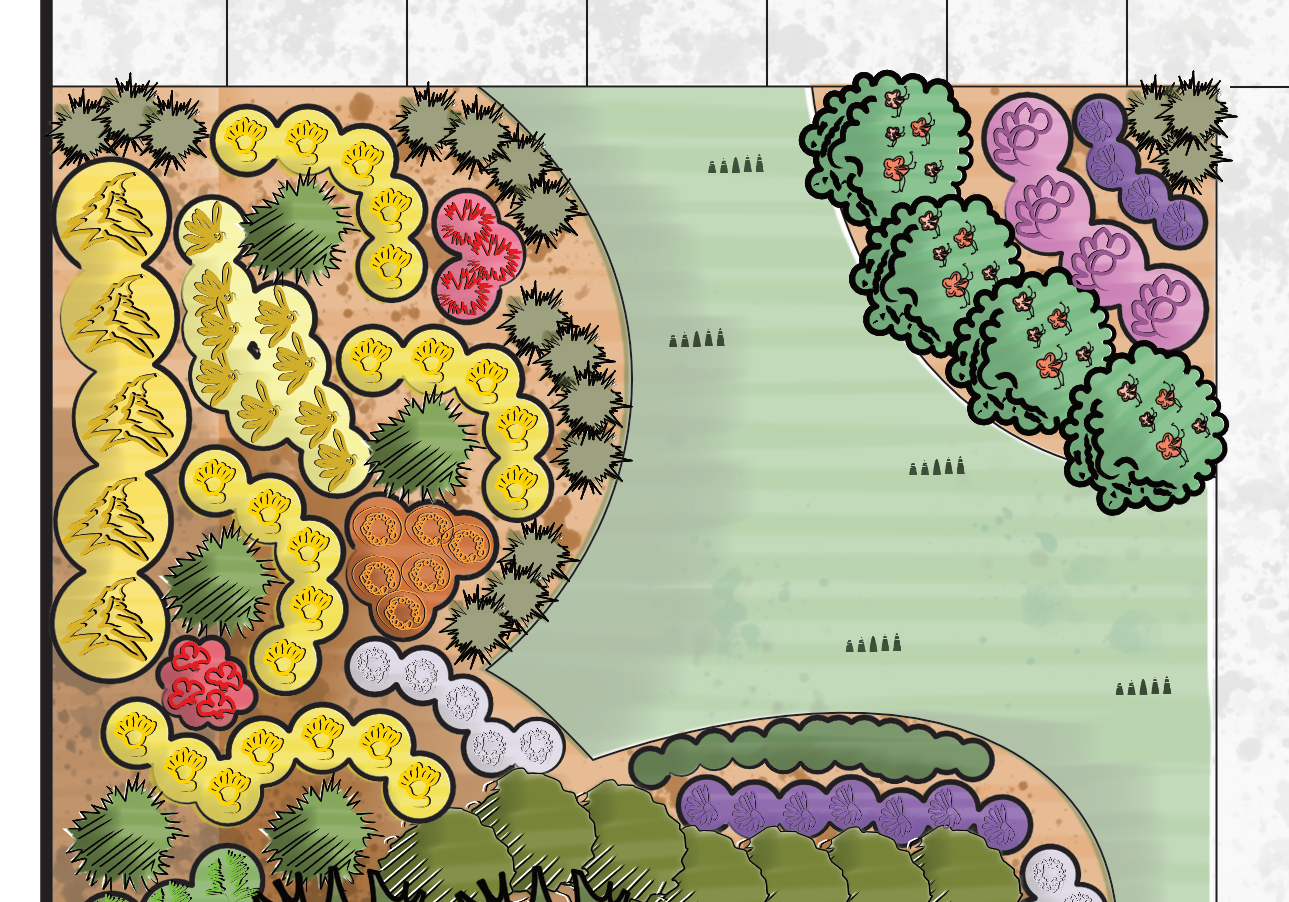
There’s something really satisfying about a garden that feels like it belongs.
Not overly manicured. Not a collection of plants dropped into a bed simply because they look good together. Instead, the garden works with the house, the existing landscape, and the natural character of the region.
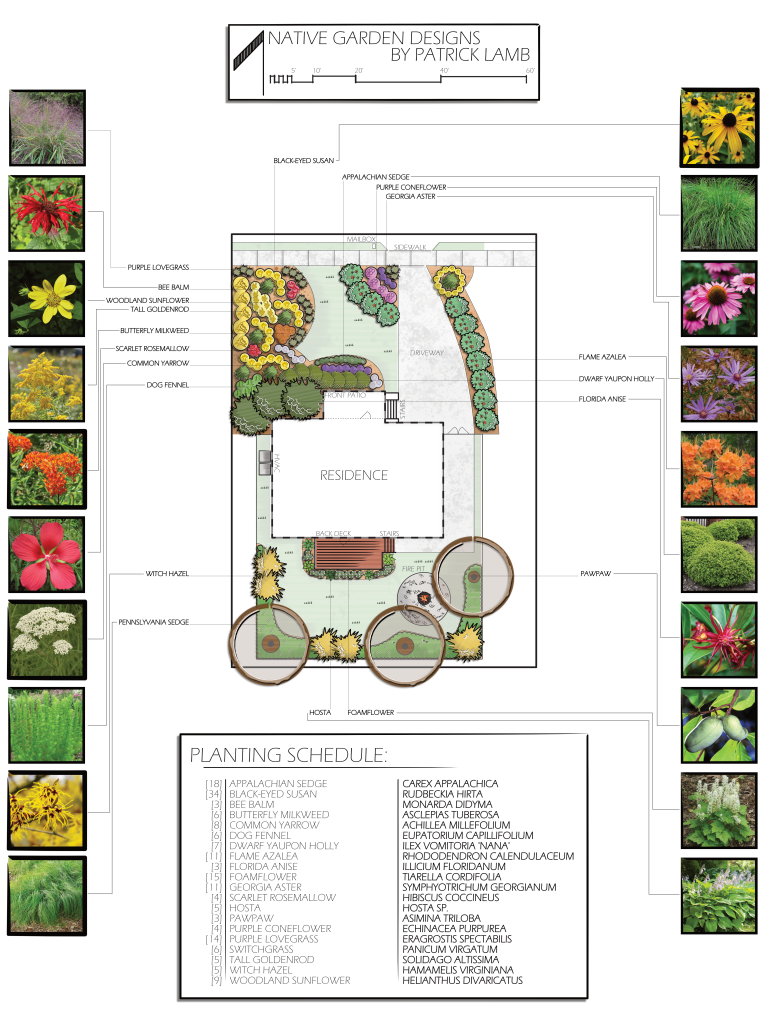
That was the goal behind this planting plan (See the full design at the bottom of the post): create a beautiful residential landscape that also functions as habitat.
This garden combines native trees, shrubs, grasses, perennials, and groundcovers to create interest throughout the seasons while providing food and shelter for pollinators, birds, and other wildlife.
And perhaps most importantly, it creates a landscape that the homeowner can actually enjoy.
A Garden Designed Around the Way People Use the Yard
A good planting plan isn’t just about putting plants in the ground. It’s about understanding how people move through and use a space.
This property has several important areas to work around, the front walkway, driveway, front patio, back deck, fire pit, and existing residence.
Rather than fighting those spaces, the planting design uses them to create a series of smaller garden moments.
The front entry gets colorful, pollinator-friendly plantings that welcome you toward the house. The driveway planting softens the hard edge of the pavement. Around the back deck and fire pit, the planting becomes more relaxed and intimate.
The result is a garden that feels connected rather than fragmented.
Native Plants Take Center Stage
The plant palette is intentionally made up almost entirely of plants native to the Southeast.
That means we’re not just choosing plants because they tolerate our climate. We’re choosing plants that have evolved alongside the insects, birds, and wildlife that call this region home.
Some of the stars of this garden include:
- Black-Eyed Susan, Rudbeckia hirta
- Purple Coneflower, Echinacea purpurea
- Bee Balm, Monarda didyma
- Butterfly Milkweed, Asclepias tuberosa
- Georgia Aster, Symphyotrichum georgianum
- Tall Goldenrod, Solidago altissima
- Woodland Sunflower, Helianthus divaricatus
- Scarlet Rosemallow, Hibiscus coccineus
- Purple Lovegrass, Eragrostis spectabilis
- Switchgrass, Panicum virgatum
- Appalachian Sedge, Carex appalachica
- Dog Fennel, Eupatorium capillifolium
And that’s just the perennial layer.
The woody plants add another important dimension, including Witch Hazel, Flame Azalea, Dwarf Yaupon Holly, Florida Anise, and Pawpaw.
Together, these plants create a layered landscape rather than a flat row of flowers.
From Spring to Fall, Something Is Happening
One of the things I love about native gardens is that they don’t have to be at their peak for one short window of the year.
A well-designed native planting can change dramatically as the seasons move along.
Spring brings fresh foliage and early blooms, with plants like Florida Anise, Flame Azalea, Witch Hazel, and Bee Balm helping to wake the garden up.
Summer is when the pollinator garden really starts to come alive. Black-Eyed Susan, Butterfly Milkweed, Purple Coneflower, Scarlet Rosemallow, and Bee Balm bring plenty of color while providing nectar and other resources for insects.
Then comes fall, when plants like Georgia Aster, Tall Goldenrod, Purple Lovegrass, and Woodland Sunflower help carry the garden into the later part of the growing season.
And even after the flowers fade, the garden isn’t finished.
Seed heads, stems, grasses, and leaf litter can provide food and overwintering habitat for wildlife through the colder months.
A Garden for Pollinators, and Much More
It’s easy to think of a pollinator garden as simply a place for bees and butterflies.
But a functioning native garden supports an entire web of life.
The flowers provide nectar for adult insects. Native plants also provide leaves and other resources for caterpillars and other insects. Those insects, in turn, become food for birds and other wildlife.
The shrubs and trees provide additional shelter and structure.
Even something as seemingly simple as leaving flower stalks standing through winter can make a difference.
The goal isn’t to create a garden that looks alive. It’s to create one that actually is alive.
The Pawpaw: A Tree With a Story
One of the more interesting plants included in this design is Pawpaw (Asimina triloba).
Pawpaw is a fascinating native tree that often gets overlooked in conventional residential landscaping.
It has large tropical-looking leaves, produces unusual edible fruit, and serves as the host plant for the caterpillars of the Zebra Swallowtail butterfly.
It’s a great example of what I look for when designing native gardens: plants that bring something interesting to the landscape while also playing an ecological role.
Softening the Hardscape
Native gardens don’t have to mean turning the entire property into a meadow.
In fact, some of my favorite designs are the ones where the native planting works alongside traditional residential elements.
Here, the plants soften the driveway, frame the walkways, surround the patio and fire pit, and create transitions between the house and the garden.
Grasses and sedges help provide structure.
Shrubs create height and screening.
Perennials provide seasonal color.
Ground-level plants fill in the spaces between.
Together, those layers make the hardscape feel less dominant and help the entire property feel more connected to the surrounding landscape.
A Little Wild, But Still Intentional
There’s a balance to designing an ecological garden for someone’s home.
We want wildlife to feel welcome, but we also want the homeowner to feel comfortable sitting on the patio, walking to the front door, or enjoying a fire with friends.
That means the garden can be wild without being messy.
Planting in intentional masses helps accomplish this.
Instead of scattering individual plants randomly throughout the property, groups of the same species are repeated throughout the design. This creates visual rhythm and makes the planting feel deliberate.
The garden can still change, move, and evolve, but it has a framework.
Designing for People and Nature
Ultimately, that’s what this planting plan is about.
It’s not about choosing between a beautiful garden and an ecological garden.
You can have both.
A garden can frame your front door, make your driveway more inviting, give you a beautiful place to sit, provide seasonal color, and still offer food and habitat for the wildlife around you.
And when those things happen together, the landscape becomes more than decoration.
It becomes part of the ecosystem.
That’s the kind of garden I want to create: beautiful enough for people, useful enough for wildlife, and designed to get better with time.
Build a garden. Give wildlife a place to live. And make your little corner of the world a little more alive.
Leave a Reply